
Thank you for choosing our office for your composite veneer treatment using the Marshall Hanson Method (MHM). Home care and routine dental care are very important in order to extend the lifespan of your new smile. To properly maintain your new veneers, please follow the guidelines below:
Home Care
Flossing/WaterPik™: The best way to maintain healthy gums and prevent buildup on your veneers is to consistently floss and/or use your WaterPik™.
- Floss with an expandable floss, such as Cocolab Cocofloss or Oral-B Expanding Floss, two times a day.
- Use a WaterPik™ (or similar device) once a day, preferably before bed.
- Never let your gums get red, tender, or bleed. If you see any of these signs, you can fix them by improving the quality or quantity of flossing and water picking.
Brushing: Brushing your teeth regularly will help prevent buildup on your veneers.
- Brush two times a day using a soft bristle brush. An electric or manual toothbrush will work.
- Use a toothpaste with a low abrasive index (50 or less) on the Relative Dentin Abrasivity (RDA) scale. This includes products from Arm & Hammer and Oxyfresh. Plain water with baking soda is the best option as it is the lowest amount of abrasivity.
- Avoid toothpastes with whitening ingredients as they are on the higher end of the Abrasiveness Scale.
Retainers: Wearing your retainer will further protect your veneers and keep them straight.
- Insert the retainers before bed, and remove it in the morning.
- If you experience discomfort or difficulty wearing the retainers, contact our office. Minor adjustments may be needed.
- Cleaning Your Retainers: Clean your retainers daily after each use.
- Rinse with lukewarm water immediately after removing it.
- Brush it gently with a soft toothbrush (no toothpaste—it can be abrasive).
- You may use mild soap or non-abrasive denture cleaner if needed.
- Allow the retainers to air dry completely before storing it to prevent bacterial growth.
- Dental ultrasonic retainer cleaner pods, such as the Dental Pod® by Zima, are a great option to reduce build-up of plaque, bacteria, and debris on your retainers.
Long-Term Maintenance
Staining: Staining of the composite veneers can occur over time due to exposure to various substances. This is superficial and can often be polished at hygiene appointments.
- Avoid excessive consumption of staining foods and drinks.
- Avoid tobacco.
- Rinse your mouth with water after consuming stain-causing items.
Habits: Avoid anything that would introduce high or sudden forces to the teeth. These restorations are about as strong as a natural tooth when they are finished. In order to chip or break them, it would require a force that would have broken a real tooth.
- Do not use your teeth to open up bottles.
- Do not bite your nails.
- We encourage thoughtful management of high forces. Less force overtime will increase longevity.
Tooth & Gum Sensitivity: It is normal for some people to experience minor tooth sensitivity after receiving composite veneers.
- Mild to moderate sensitivity is normal and should subside within 24–72 hours.
- Avoid extremely hot or cold foods and beverages.
- Avoid de-sensitizing products that contain stannous fluoride for about two weeks. These can cause dark stains on your teeth.
- If needed, over-the-counter pain relievers like ibuprofen or acetaminophen can help manage discomfort.
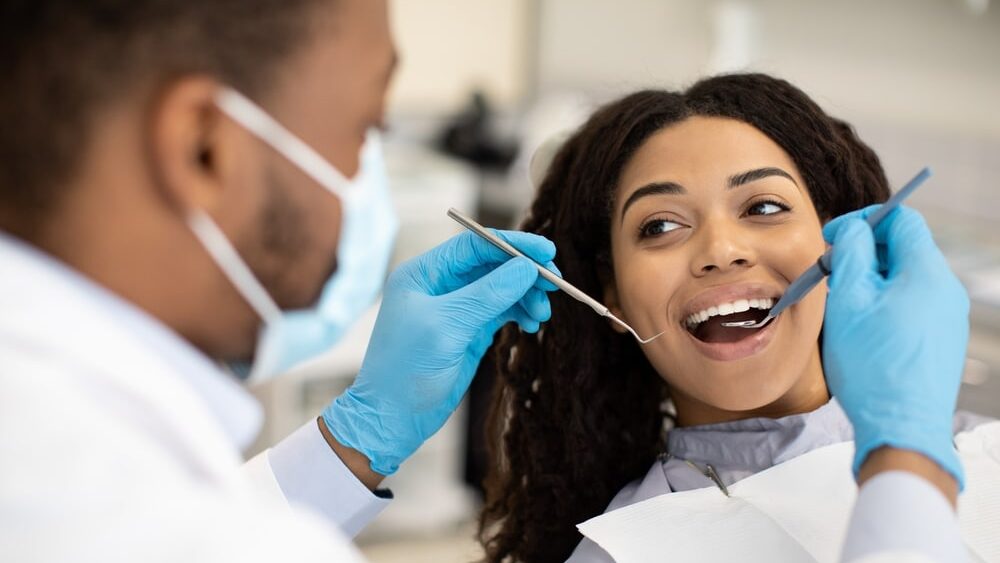
Dental Visits: Regular dental cleanings and exams are vital to the longevity of your veneers. See your dentist/hygienist at least two times a year for your dental cleaning.
- X-rays: The material that we use for MHM is not a traditional composite filling material. It will not show up the same way on an x-ray as traditional composites do. It may appear dark on the x-ray which is normal for this material. It does not indicate the presence of decay or other problem. In order to enhance the color and polished stability of the material, the chemistry does not show up on an x-ray.
- Cleanings: Inform your dentist and hygienist about your composite veneers. Your dental provider should not to use any sharp instruments on them. Typical instruments that are used to remove calculus and build up, like sharp metal scalers, and sonic cleaners, like Cavitron, can potentially do damage to the material if not used with care. We would prefer that if plastic scalers are used when needed. Most hygienist will have a plastic scaler as we generally do not use metal scaler on implants either.
- Furthermore, we would prefer that the hygienist does not use any Proxyt paste. Depending on how course the grit in the paste is, it could temporarily dull the surface of the MHM material.